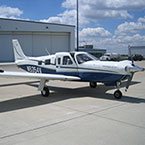
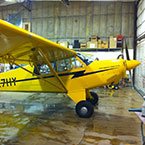
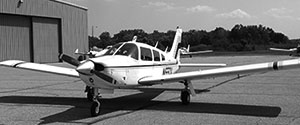
Learn to fly aerobatics. Be an air show pilot for a day. Find an aerobatic school and start your basic aerobatic training today. Even if you're not a pilot you can still call you're local aerobatic school and ask to take an aerobatic lesson or just pay for an hour of aerobatics with an instructor. Aerobatic rides also make a great gift. To purchase an aerobatic ride gift certificate just call your local aerobatic school. They will be happy to help you out.
Helicopter Schools

Flight School List Heading

You Are Viewing Our Aerobatic Flight Schools Page
The Largest and most complete flight schools list on the Internet.
Aerobatic Flight Schools
2008
Flight Schools
Pilot Shop Direct--Aviation Aerobatic Pilot Supplies: Books,Flight Bags,Headsets,Software,Videos, FAA Test Guides,Aircraft Supplies,Pilot,Apparel,Pilot Training Kits and More!
   
Aerobatic School Locations:

Greg Koontz Aerobatics

Ashville, AL

Chandler, AZ

Berkeley, California

Livermore, CA

Morris, Illinois

General Aviation International

Miami ,Florida

Aerobatic Training-Aerobatic aircraft rental-Aerobatic lessons-Aerobatic rides
Featured Flight School

Midway Aviators Inc Midway Aviators Image

Chicago's Largest Flight School

Featured Aviation Link

Flight School Jobs Flight School Jobs Image

Aviation Jobs Post

Top Aviation Links
Our Other Pages
Aero Wiki


Flight Training Forum.Com
Multi Engine Info.Com
Flight School Jobs.Com
How to shop for Quality Aerobatic Training

by Rich Stowell http://www.richstowell.com/

The following information should be used as a general guideline. The layout may look familiar -- that's because I've followed the formatting of an FAA Advisory Circular (Who knows, maybe the FAA will help further our cause by turning this into an actual AC. The points discussed below could easily replace the obsolete AC 91-48 dated June 29, 1977. Anyone from the FAA interested???)

1. Purpose. The following information is primarily for pilots who are interested in receiving spin, emergency maneuver, or aerobatic training. It also offers guidance to flight instructors who provide such training. Regulations governing aerobatic flight and the airworthiness standards for the type certification of small airplanes, especially in regard to FAR Section 23.221 concerning spin maneuvers, are reviewed as well.

2. Related Reading Material. The following documents may be obtained at no cost by sending a written request to: U.S. Department of Transportation, Subsequent Distribution Center, Ardmore East Business Center, 3341 Q 75th Avenue, Landover, MD 20785:

  1. AC 61-67B, Stall and Spin Awareness Training.
  2. AC 90-23E, Aircraft Wake Turbulence.
  3. AC 91-61, A Hazard in Aerobatics: Effects of G-Forces on Pilots.
  4. AC 91-51A, Effect of Icing on Aircraft Control and Airplane Deice and Anti-Ice Systems
    (see Appendix 1. Roll Upset).

3. Background. The last few years has seen a resurgence in aerobatic and other unusual attitude training activity. A host of new aerobatic videos and books have appeared on the market as well as several new training aircraft approved for intentional spins and other aerobatic maneuvers. In an effort to enhance safety in this unique and relatively unregulated environment, it would seem that some basic guidelines for pilots are in order.

4. Definitions.

Aerobatics/Acrobatics.
FAR 91.303 defines aerobatic flight thusly: an intentional maneuver involving an abrupt change in an aircraft's attitude, an abnormal attitude, or abnormal acceleration, not necessary for normal flight. Note that aerobatic flight is not demarcated by a specific pitch attitude or bank angle. (Aerobatic flight is often mistakenly thought to occur only when an aircraft exceeds 30 degrees of pitch or 60 degrees of bank relative to the horizon. This 30/60 rule, which appears under FAR 91.307 (c), merely specifies the conditions under which parachutes must be worn by the occupants of an aircraft.) In the classical sense, the term aerobatics includes spinning, looping, and rolling an aircraft through 360 degrees of yaw, pitch, and roll.
FAR's.
The Federal Aviation Regulations.
Load Factor.
Also referred to as g-load. In aerobatics, g-load is the ratio of lift to the total weight of an aircraft (g = L/W). Positive g's press the pilot more firmly into the seat; negative g's try to push the pilot out of the seat.
Parachute.
A device used, or intended to be used, to retard the fall of an object through the air.
POH/AFM.
The approved aircraft Pilot Operating Handbook or Airplane Flight Manual.

5. General Considerations. Spin, emergency maneuver, and aerobatic training (referred to hereafter simply as aerobatics) is a highly specialized field of endeavor. It commands the same attention to detail and professionalism as other forms of flight training. For instance, just as it would be imprudent to fly in the clouds in an aircraft not equipped to handle flight in Instrument Meteorlogical Conditions, it would be equally imprudent to attempt spin training in an aircraft in which spins are not approved, or with an instructor who has minimal experience spinning a particular aircraft.

Since the regulations allow considerable latitude in the case of aerobatic instruction, you -- the aviation consumer -- must apply your own set of standards in your quest to find quality training. Although the following guidelines cannot guarantee competent, safe instruction, they should equip you with some of the information needed to reach an intelligent decision about the services offered by various operators.

6. Evaluating The School. Finding a good school is where the aerobatic training process begins. An excellent starting point is the International Aerobatic Club (IAC), which not only publishes a free directory of aerobatic schools, but also has over twenty-five years of experience compiling information on subjects ranging from competitive aerobatics, to human factors, to technical problems affecting aerobatic aircraft. Also watch for magazine articles highlighting aerobatic schools and talk to other pilots about their experiences with spin, emergency maneuver, and aerobatic training.

If possible, visit the prospective school and take note of its atmosphere. The size of the operation isn't important; what is important is the attitude of those working there. Find out what teaching aids are used in the classroom, and ask for recommendations on related reference materials. Find out if the school specializes in the training sought and request a list of former students. Ultimately, you should feel comfortable with the surroundings and confident in the school's ability to provide quality training.

7. Evaluating The Program. One of the earmarks of a quality spin, emergency maneuver, or aerobatic program -- be it a Part 61 or Part 141 operation -- is the existence of a training syllabus. Schools that specialize will be able to present a clear plan of action. You certainly cannot earn a pilot's certificate or an instrument rating without comprehensive ground instruction coupled with hands-on experience. The same is true with aerobatic training -- a thorough briefing before each flight is a must. Be wary if ground instruction only occurs during the stroll out to the airplane, or if the training philosophy is that you'll learn all you need to know in the air.

Besides being exhilarating, aerobatic training should improve your finesse, timing, and judgment. It's a precision art form, not an iron man competition to see how many g's can be pulled. Also, it's a rare individual who can tolerate a full hour of aerobatics. Around forty-five minutes per flight is more realistic. Furthermore, it is reasonable to expect the following from your training program:

Spin Training:
A primary spin course can be accomplished in an environment ranging from +0.5 to +2.5 g's. As a minimum, expect to cover stalls and one-turn spins. A review of stall/spin scenarios and recoveries from unusual attitudes may also be included.
Emergency Maneuver Training:
Such a program can be accomplished in an environment ranging from -1.0 to +4.0 g's, perhaps less (routinely experiencing more g's than this is unnecessary). As a minimum, expect to cover the same material as in a spin training program plus rolls, roll recoveries, and rolling upset scenarios. Other in-flight emergencies such as control failure and off-airport landing simulations may also be included.
Aerobatics:
Basic aerobatics can be accomplished in an environment ranging from -1.0 to +4.0 g's, perhaps less (again, routinely experiencing more g's than this is often unnecessary). As a minimum, expect to cover spins, rolls, emergency spin and roll recoveries, loops, combination maneuvers such as the half loop-half roll (Immelmann), and hammerhead turns. Inverted turns and inverted spins may be included as well.

8. Evaluating The Instructor. The requirements necessary to earn various certificates and ratings in airplanes, rotorcraft, gliders, and lighter-than-air craft are listed in FAR Part 61. In addition, Part 61 addresses minimum requirements and logbook endorsements needed in order to tow gliders or act as pilots-in-command of tailwheel aircraft. However, no separate certificate, rating, or endorsement is required by regulation that specifically qualifies a pilot to be a spin, emergency maneuver, or aerobatic instructor.

Of course, an aerobatic instructor must hold a valid Commercial certificate if working for compensation or hire. The aerobatic instructor must also be an FAA-certified flight instructor (CFI) to endorse the spin training required of Flight Instructor Applicants. Other than that, CFI credentials are not needed for anyone to claim to be an aerobatic instructor. Therefore, caveat emptor -- let the buyer beware -- applies when seeking aerobatic instruction.

As with other forms of flight training, the aerobatic instructor is the vital link in the learning process. The instructor will be coaxing you through some exciting and unusual attitudes. In fact, you may be exposing your innermost fears to this person, and you'll be placing your life into the instructor's hands. Be sure, then, to ask about the instructor's background. Ascertain whether the instructor specializes in aerobatics, or if it's merely a casual interest. Moreover, if you don't develop a good rapport with the instructor, don't hesitate to request another one.

Good instructors will tailor their style to match your abilities and needs. Professional instructors should instill confidence, should treat you as an equal, and should be sensitive to your physiological make-up. Expect to do the bulk of the flying yourself -- after all, that's why you've signed up for aerobatic training. The instructor's job is to coach you through the various maneuvers, not to impress you with his or her aerobatic prowess.

When interviewing potential aerobatic instructors, consider these questions:

  • Is the instructor a CFI?
  • Does the instructor specialize?
  • Does the instructor belong to IAC, NAFI, or other aviation organizations?
  • Does the instructor have competition or airshow experience?
  • Is the instructor involved in the FAA Wings Program?

9. The Training Aircraft. FAR 91.319 (a) (2) prohibits the use of experimental aircraft for compensation or hire; therefore, formal aerobatic training may only be conducted in certificated, production aircraft (Exception: owners of experimental aircraft may receive dual instruction in their aircraft). It's imperative to restrict your maneuvers only to those clearly approved in the aircraft's POH/AFM. Intentional spins, for example, can be done safely only when operating in the Acrobatic category (in some cases, spins may also be approved when operating in the Utility category). Other approved aerobatic maneuvers must be reserved for airplanes designed to handle the rigors of aerobatic flight. The design structural limits of +6.0 and -3.0 g's required of aircraft operated in the acrobatic category afford a sufficient margin of safety above the typical loads imposed during basic aerobatic training. The training aircraft should be well maintained and must be operated within its prescribed weight and balance limits.

Preflighting an aerobatic airplane isn't all that different from a non-aerobatic airplane. Follow the procedures in the POH/AFM, paying special attention to points of connection, the engine compartment, and the control surfaces. Wrinkling or deformations in the airplane's skin should be questioned. A sterile cockpit and baggage area -- devoid of potential projectiles such as fuel strainers, loose manuals, etc. -- is important to the safety of an aerobatic flight. If possible, shine a flashlight down the fuselage behind the seats. Look for misplaced tools and other foreign objects. Also, dirt on the cockpit floor might get in your eyes during low-g or inverted flight. Be sure to empty your pockets and leave loose change, keys, and pens in the classroom.

Some trainers have a redundant set of seatbelts for aerobatic flight. Learn how to operate the various buckles. Emergency egress is an important consideration as well, so inquire about the airplane's emergency egress procedure. The door or canopy on most aerobatic airplanes can be jettisoned by removing a pin and/or pulling on a clearly-marked handle. Some windows can be pushed open as well. Be sure to rehearse the emergency egress/bail out procedure with your instructor.

10. Parachutes. Pursuant to FAR 91.307 (c), approved parachutes are mandatory for flight operations that will exceed 60 degrees of bank or 30 degrees of pitch relative to the horizon. The only exception to this is spin training administered by a CFI to a Flight Instructor Applicant seeking a spin training endorsement (this endorsement states, in part, that the Applicant has demonstrated instructional competency in spin entry, spins, and spin recovery techniques). Even though parachutes are not required in this special case, it is recommended that they be used nonetheless, if available. If you are engaged in spin training for any other reason, or if you'll be performing other maneuvers that will exceed 30 degrees of pitch attitude and/or 60 degrees of bank, parachutes are required equipment.

Many emergency maneuver and aerobatic maneuvers will necessarily exceed 30 degrees of pitch and 60 degrees of bank; therefore, parachutes are a must for this training. Do not enroll in any aerobatic program if parachutes are not included as standard safety equipment. Also, parachutes must be inspected and repacked periodically:

  • Within the preceding 120 days if the parachute is a chair type (i.e.: canopy in back), or if its canopy, shrouds, and harness are composed exclusively of nylon, rayon, or other similar synthetic material; or,
  • Within the preceding 60 days if any part of the parachute is composed of silk, pongee, or other natural fibers.

11. The Practice Area. FAR 91.303 lists conditions under which aerobatic flight is specifically prohibited. No person may operate an aircraft in aerobatic flight:

  • Over any congested area of a city, town, or settlement;
  • Over an open air assembly of persons;
  • Within the lateral boundaries of the surface areas of Class B, Class C, Class D, or Class E airspace designated for an airport;
  • Within 4 nautical miles of the center line of any Federal airway;
  • Below an altitude of 1,500 feet above the surface [Note: expect your aerobatic training to take place between 3,500 feet and 5,000 feet or more above the surface]; or
  • When flight visibility is less than 3 statute miles.

A school nestled in a metropolitan area, or under a complex web of controlled airspace, may need a waiver (renewable annually) issued pursuant to FAR sections 91.903 and 91.905 to conduct aerobatics legally. The waiver lists the specific provision(s) of 91.303 that are being waived and defines the physical size and location of the aerobatic practice area. The waiver lists altitude limitations, hours in effect, and special provisions which must be satisfied as well. If you feel that aerobatic training is being conducted contrary to 91.303, and if the flight school cannot produce a waiver for your perusal, it is recommended that you switch to another school.

12. The Personal Commitment. Getting the most out of spin, emergency maneuver, and aerobatic training is a two-way street. You can select a good school, with an excellent instructor, using the best equipment money can buy. It's up to you, however, to be committed to learn. Review your class notes. Take time to mentally rehearse maneuvers and procedures at home before your next flight. Go to the lessons armed with questions and interact with your instructor.

Basic programs can typically be as short as three hours, or can be as long as ten. In any case, it's important to pace yourself until the program is completed. Fly a minimum of once a week. More often is better, but no more than twice in any given day. This type of training is as mentally taxing as it is physically demanding, so allow yourself ample time to rest between flights. Postpone a lesson if you're not feeling well, and certainly cut a lesson short should you start to feel uneasy. To reduce the risk of airsickness, try to be well rested going into each lesson. Eating in moderation, drinking plenty of fluids, and avoiding junk food immediately before or after a flight can also minimize any airsickness tendencies.

The overall cost of aerobatic training is influenced by the type of trainer used, the reputation and geographic location of the school, and the experience of the instructor. Although the per-hour cost may seem higher when compared to traditional flight training, recognize that you'll be gaining a tremendous amount of new knowledge in a relatively short amount of time. The techniques learned will improve your other flying skills immeasurably and likely could save your life someday.

Once you select an instructor and a program you're comfortable with, try to relax. You're embarking on a unique flying experience, and butterflies are perfectly normal. Focus on the techniques being taught. You'll be amazed at how quickly apprehension dissolves into enjoyment and a desire to perform the maneuvers well. Above all, you should come away from spin, emergency maneuver, and aerobatic training rewarded with enhanced confidence, a deeper appreciation for the flight environment, and a profound respect for the special equipment and skill needed to loop, spin, and roll an airplane safely.

Provided by Rich Stowell's Aviation Learning Center